


From August 2024 to July 2025, 46% of people who contacted the Identity Theft Resource Center (ITRC) for direct assistance were first-time identity crime victims.
Identity theft is a growing and alarming threat, with individuals falling victim to it almost every minute. Cybercriminals now breach databases with sophisticated phishing schemes, malware attacks, and ransomware and exploit software vulnerabilities that trick unsuspecting individuals into revealing sensitive information. These thieves exploit personal information for a wide range of fraudulent activities, from opening credit accounts and draining bank balances to filing false tax returns.
Identity theft is not just a financial crime; it can severely impact your reputation, credit score, and emotional well-being. Early detection and proactive prevention are crucial in safeguarding your personal data.
So, continue reading this blog to understand these preventive measures in detail.
Overview : Safeguarding Your Personal DataIdentity theft in the United States continues to rise, with nearly half of recent victims experiencing it for the first time. This guide outlines six evidence-based preventive strategies, including advanced password protocols, credit monitoring, SSN protection, fraud alerts, device encryption, and digital footprint audits. Implementing these proactive cybersecurity and financial safeguards significantly reduces exposure to fraud, credit damage, and long-term legal complications. |
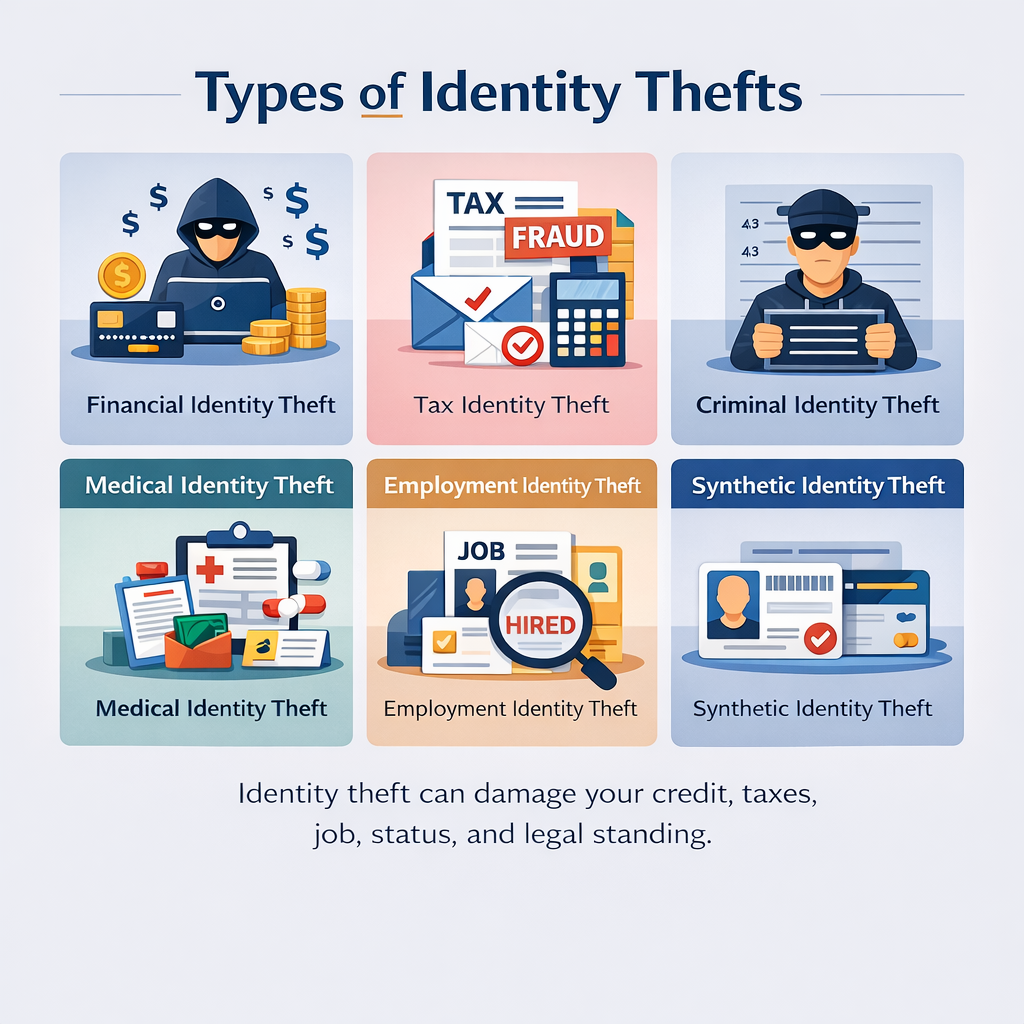
Types of Identity Thefts
Preventive Measures To Avoid Identity Theft Risks
Identity theft can cause financial, emotional, and reputational harm, making it more important to implement the precautionary measures that can help safeguard your personal information. Here are the preventive measures:
Strengthen Password Security
A weak password makes it significantly easier for hackers to access your account and commit identity theft. This is why strengthening your password strategy through the following steps becomes crucial, as a strong password serves as the first line of defense against unauthorized access.
- Use Long and Complex Passwords: Avoid creating predictable passwords using your birthdates, family names, or a simple combination like “12345.” Instead, create passwords that include a mix of lowercase and uppercase letters, special symbols, and numbers, aiming for at least 12-16 characters for better security.
- Change Passwords Regularly: You must change your password every 3-6 months to reduce the chances of unauthorized access.
- Enable Two-Factor Authentication (2FA): Always enable two-factor authentication on the online accounts as it adds a secondary layer of security by asking for a code in addition to your password during the login.
- Regularly Monitor Account Logins: Most accounts allow you to view recent login history/ activity, which can help you review the records for safety. If you become a victim, you must seek assistance from lawyers for identity theft, as they will help you recover your identity and minimize the damage.
Secure Personal Devices And Networks
Your Wi-Fi networks and personal devices can serve as gateways for hackers if they are left unprotected, which is why you must know how to secure them to keep your personal data private. Here’s how:
- Enable Encryption For Devices And Wi-Fi Networks: You must enable encryption for mobile devices and computers to ensure your data is unreadable without the password. Along with this, you can also enable the WPA3 or WPA2 encryption for your Wi-Fi network to secure the communication between your devices and the router.
- Update Device Software Regularly: Identity theft often occurs when hackers exploit outdated software with security vulnerabilities. You must always update your operating system, application software, and antivirus to protect yourself.
- Use A VPN On Public Wi-Fi: Utilize Virtual Private Networks (VPN) as it encrypts your online activity, making it unreadable to hackers when your device is connected to public Wi-Fi.
Monitor Financial Statements And Credit Reports Regularly
Constantly monitoring your financial data can help you detect fraudulent activities early, which can further help you minimize the risk of financial loss and identity theft. Have a look at the following steps to monitor your financial statements and credit reports:
- Review Bank statements: Check your bank statements for unusual or unauthorized transactions.
- Set Up Alerts: Set real-time alerts via SMS or email, as it will notify you of transactions exceeding a specific amount or any login activity.
- Check Your Credit Report Periodically: You must review your credit reports to easily spot signs of identity theft by looking at the unknown loans, accounts, and inquiries you did not authorize. If fraudulent activities persist, you may need to seek the help of a mixed credit report attorney to resolve issues.
- Act on Discrepancies Immediately: In case you spot anything unusual, you must immediately report it to the bank and the credit reporting agencies to limit the damage.
Protect Social Security Number And Other Sensitive IDs
Social Security Number (SSN) is a crucial piece of identity information that can be easily misused if exposed. This is why proper handling and protection of this sensitive identification is essential to safeguard your identity. Let’s understand how you can do so:
- Keep Documents Secure: Store the physical document copies containing your SSN locked in a safe place. Share your SSN only when absolutely necessary, such as during tax filings, financial transactions, or other essential situations requiring its use.
- Request A New SSN If Exposed: If you suspect your SSN is exposed, then you can request a new one. With this, you must ensure to shred financial statements, medical bills, and other papers containing your personal information before disposing of them.
- Use Alternative IDs When Possible: Avoid sharing your SSN for non-essential transactions. Rather, use alternative IDs.
Place Fraud Alerts Or Credit Freezes If Necessary
An attorney for identity theft can help you manage the complexities of fraud alerts and credit freezes, which are key measures to stop unauthorized access to your credit file. Here’s what these terms mean:
- Fraud Alerts: Placing these alerts on your credit file ensures that the creditors verify your identity before approving an application or a new loan.
- Credit Freeze: It restricts access to your credit file completely unless you lift it temporarily. This prevents new accounts from being opened.
Review Your Digital Footprint And Remove Unnecessary Information
Your online presence can unintentionally reveal your personal details that identity thieves can use. Here are some effective ways to audit and manage it:
- Search Yourself Online: Evaluate what personal information, such as addresses, phone numbers, or accounts, appears publicly by using search engines.
- Delete Old Social Media Accounts: Ensure to close old accounts that you no longer use, as shared data can easily be misused.
- Adjust Social Media Privacy Settings: Limit the personal information visible publicly and make your social media profiles private.
- Request Data Removal: You can also contact websites or data brokers to have your personal information removed from their databases.
Final Thoughts
Identity theft is a serious concern, but taking proactive steps can greatly reduce the risk. By implementing preventive measures, individuals can better protect their sensitive information and prevent unauthorized access. These actions help minimize vulnerabilities and provide peace of mind in safeguarding your identity.
And in case of complex legal challenges related to identity theft or other financial disputes, professional legal support is essential. Zemel Law Firm specializes in protecting clients from identity theft repercussions and also has exceptionally experienced debt collection harassment attorneys who are well-versed in defending against aggressive and unlawful collection practices.
FAQs
Q1. What is the fastest way to know if someone has stolen my identity?
The earliest warning signs include unfamiliar credit inquiries, unauthorized bank transactions, unexpected IRS notices, denied credit applications, or debt collection calls for accounts you never opened. Setting up real-time bank alerts and reviewing your credit report monthly allows faster detection than waiting for annual checks.
Q2. How do identity thieves use my Social Security number once they get it?
Criminals use stolen SSNs to open credit cards, apply for loans, file fraudulent tax returns, access medical services, commit employment fraud, and even create synthetic identities. Because SSNs link directly to financial and government systems, misuse can affect your credit profile and legal standing for years.
Q3. Should I place a fraud alert or a credit freeze after suspected identity theft?
A fraud alert notifies creditors to verify identity before issuing new credit, while a credit freeze blocks access to your credit file entirely. A freeze provides stronger protection and is recommended when you suspect active misuse of your personal information.
Q4. Can identity theft affect my credit score permanently?
If not addressed quickly, fraudulent accounts and missed payments can severely lower your credit score. However, under U.S. consumer protection laws, victims can dispute fraudulent entries and restore their credit history with proper documentation and timely reporting.
Q5. What legal options do identity theft victims have in the United States?
Victims can file reports with the Federal Trade Commission, notify credit bureaus, dispute fraudulent accounts, and pursue civil action when negligence or third-party misconduct is involved. Legal assistance becomes essential when credit repair disputes or debt collection harassment escalate.
Q6. How do data brokers and public databases contribute to identity theft risks?
Data brokers collect and sell personal information such as addresses, phone numbers, and family associations. Criminals use this publicly available data to answer security questions, craft phishing attacks, and bypass verification systems. Regular data removal requests reduce exposure to targeted identity fraud.

