


What would happen if someone assumed your identity for decades while errors in official records gradually obscured your own? For William Donald Woods, this scenario became a reality. In a widely discussed identity theft case, Woods was wrongfully arrested and spent years dealing with legal and administrative complications, including being incorrectly classified as mentally incompetent, while the individual using his stolen identity remained undetected for more than 30 years.
This case highlights the serious consequences that identity fraud can have on an individual’s life and legal standing. In this article, we will examine the case of William Donald Woods, identify common warning signs of identity theft, and discuss practical steps people can take to protect themselves from similar situations.
Identity Fraud Case SummaryThe William Donald Woods case exposed how long-term identity theft can escalate beyond financial fraud into a severe legal and personal crisis. The article explores how, according to court records/news reports, Matthew Keirans built an entire life under Woods’s identity for over three decades while institutional systems repeatedly validated fraudulent records. It also highlights major flaws in identity verification systems, the dangers of overreliance on official databases, important lessons from the case, warning signs of identity fraud, and practical steps individuals can take to protect themselves from similar situations. |
Case Study on William Donald Woods and Matthew Keirans
The First Meeting of William Donald Woods and Matthew Keirans
William Donald Woods and Matthew David Keirans reportedly met while working together at a hot dog stand in Albuquerque around 1988. At the time, both men were facing financial difficulties and unstable living conditions, which brought them into the same workplace environment.
As they became acquainted through work, Keirans gained access to Woods’s personal information and belongings. What initially appeared to be an ordinary coworker relationship later became the starting point of a long-running identity theft case that remained undiscovered for decades.
How Keirans Stole Woods’ Identity?
During the investigation, authorities found that the identity theft scheme began when Keirans gained access to Woods’s personal documents. According to Woods’s statement, Keirans stole his wallet, which contained highly sensitive items, including his Social Security card, identification documents, and other details necessary to establish a legitimate identity.
By the time Woods recovered the wallet, Keirans had already copied or memorized enough material to begin building a false identity under Woods’s name.
How Keirans Managed to Build a Life Under Woods’ Name?
According to court records/news reports, rather than committing instant and obvious fraud, Keirans spent years building an entirely new life using Woods’s identity, which made the deception much harder to detect.
Over the following decades, Keirans reportedly:
- Obtained government-issued identification documents,
- Opened financial accounts,
- Built a credit history,
- Secured loans,
- Paid taxes,
- Established long-term employment records under Woods’s name.
Eventually, he worked as a senior IT administrator for the University of Iowa Hospitals and Clinics, which further gave the appearance of legitimacy and stability.
Why Did the Fraud Go Undetected for So Long?
One of the most significant aspects of this case was that institutional systems effectively reinforced the false identity. Over time, Keirans accumulated decades of banking history, employment records, tax filings, and government documentation. As a result, databases and verification systems began treating the fraudulent identity as authentic.
Key Learnings
The case exposed how manipulated records, when repeatedly accepted by institutions, can make fraudulent identities appear more credible than those of the real victims. It also highlighted the growing risks associated with overreliance on digital verification systems and official databases without deeper scrutiny. As technology continues to shape modern identity verification, stronger accountability, improved verification practices, and faster responses to suspicious activity are essential to preventing similar cases from escalating into severe financial, legal, and psychological consequences.
Smart Ways to Protect Your Personal Identity
To avoid falling into a situation similar to that of William Donald Woods, individuals should take proactive steps to protect themselves from identity theft and financial fraud. If you believe your identity has been stolen, consult a lawyer for identity theft victims as soon as possible. Here are some methods to protect yourself:
Protecting sensitive personal information
Safeguard sensitive documents such as Social Security cards, passports, driver’s licenses, tax records, and banking information. Avoid casually sharing them with anyone, as even a single stolen document can expose you to serious identity theft and long-term financial or legal complications. In severe cases involving stolen records or fraudulent activity, consulting an attorney who handles identity theft matters can help individuals understand their legal options early.
Monitor Financial Activity Regularly
Frequently check bank statements, monitor credit card activity, and track any unfamiliar transactions. You can also set up fraud alerts, transaction notifications, and credit monitoring services to help protect yourself from suspicious financial activity and potential identity theft.
Verify Requests for Personal Information
Criminals often impersonate trusted individuals or organizations to steal sensitive information. You can protect yourself from such scams by carefully verifying phone numbers, websites, email addresses, and the legitimacy of organizations before sharing any personal or financial details.
Seek Legal Assistance
If you notice suspicious activity or believe your identity has been compromised, consult a lawyer for identity theft victims as soon as possible. An attorney may be able to explain your options and help you address disputed records, guide you through financial and legal disputes, and assist in correcting fraudulent records before the situation becomes more serious.
When to Seek Legal Help for Identity Theft?
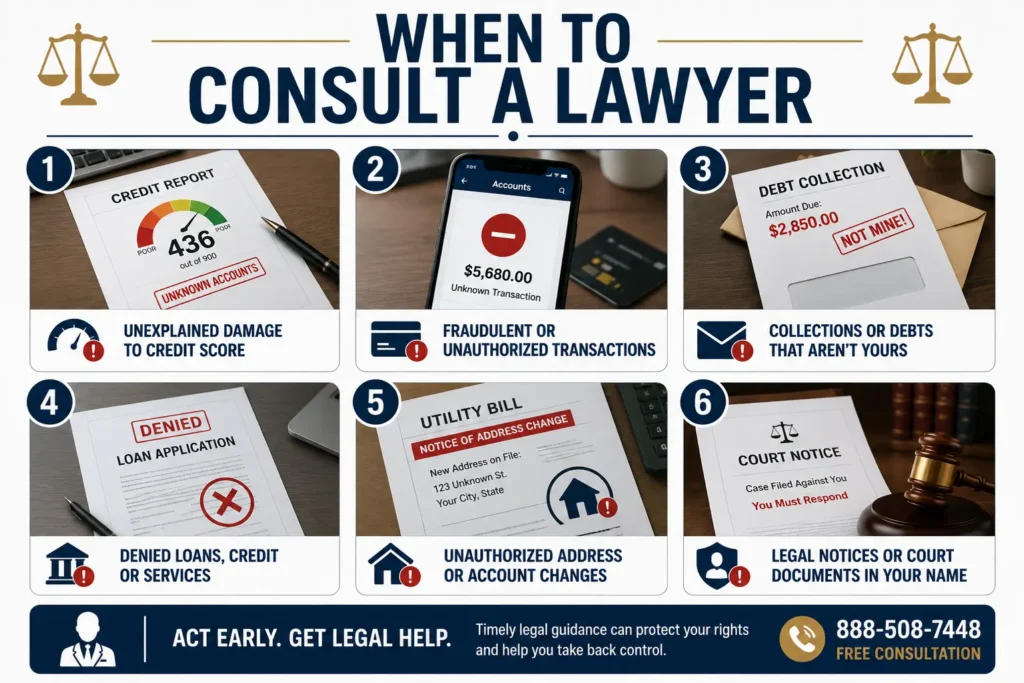
This infographic highlights the most common warning signs of serious identity theft, including unauthorized transactions, damaged credit scores, and suspicious legal notices linked to your name. It also emphasizes the importance of seeking an identity theft lawyer’s free consultation early, helping victims understand their legal options before fraudulent activity leads to more severe financial or legal consequences.
Attorney AdvertisingNo aspect of this advertisement has been approved by the Supreme Court of New Jersey. Prior results do not guarantee a similar outcome. This article is for informational purposes only and does not constitute legal advice. |
Conclusion
The William Donald Woods case demonstrates how identity theft can lead to serious legal and personal challenges when inaccurate records remain unaddressed for an extended period. As digital systems play a larger role in verifying personal information, individuals need to monitor their records, safeguard sensitive data, and take prompt action if they notice suspicious activity. Seeking legal guidance early can help address issues before they become more difficult to resolve. At Zemel Law, we offer free consultations to help individuals understand their rights, correct fraudulent records, and prevent identity fraud from escalating into long-term financial or legal consequences. For more information, contact us at 888-508-7448.
Disclaimer
“This article is for informational purposes only and does not constitute legal advice. Reading this content does not create an attorney-client relationship.”
Understanding Identity Theft: Common FAQs
Q1. Can identity theft affect criminal records?
Yes, identity theft can sometimes lead to false criminal records, wrongful accusations, or legal complications if fraudulent information becomes linked to the victim’s identity.
Q2. What are the early warning signs of identity theft?
Unexpected account activity, denied credit applications, unfamiliar loans, missing mail, or unknown charges can all indicate possible identity theft or fraudulent activity.
Q3. Can identity theft impact healthcare or insurance records?
Yes, stolen identities may sometimes be used to obtain medical services or file insurance claims, potentially leading to billing disputes and inaccurate healthcare records.
Q4. What should someone do immediately after discovering identity theft?
Victims should secure financial accounts, document any suspicious activity, report the fraud, monitor credit reports, and seek legal guidance from a trusted source as soon as possible.
Q5. Can identity theft victims recover their stolen identity completely?
Recovery is possible, but correcting fraudulent records across financial institutions, government systems, and legal databases can sometimes take significant time and effort.

